Storm damage roof repair in Rogers, Arkansas
Wind-lifted shingles, hail concerns or water after a storm deserve a close look. Start with a free inspection of the roof’s current condition.
Free roof inspections in Rogers. Discuss the condition and your roofing project before deciding on work.
Wind and hail damage on Rogers roofs
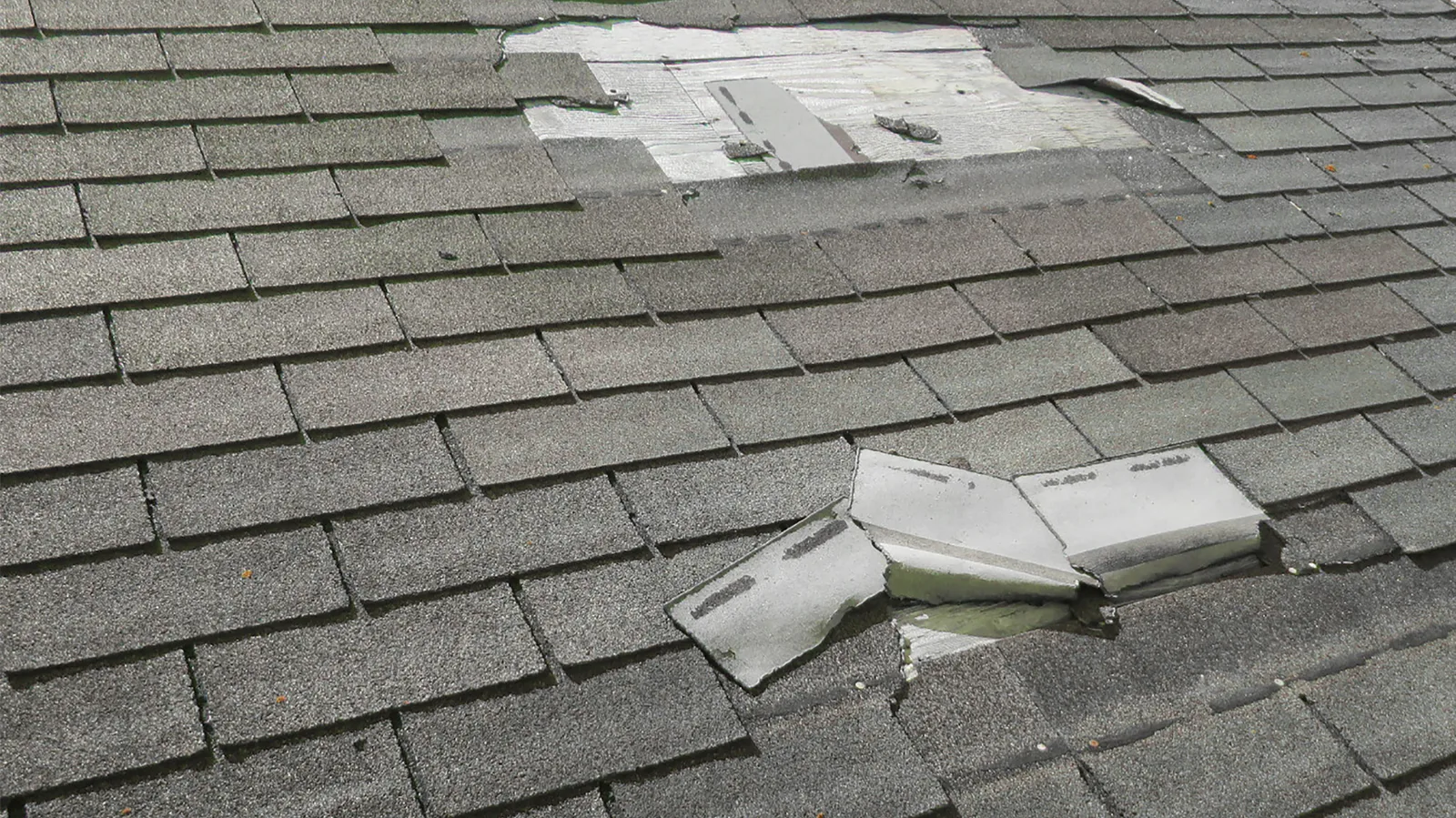
Wind can lift a shingle edge, break its seal or pull covering away from the roof. Hail impacts can displace granules and damage the shingle beneath them. Bent edge metal, damaged flashing and debris impacts bring other questions. The roof needs a close examination because a view from the yard cannot show every affected detail.
A mark on a shingle is not a complete damage diagnosis. Wear, foot traffic and other causes can also change the surface. The inspection considers the pattern and condition of the roof, then explains the work the findings support. A storm report nearby does not decide that answer for an individual property.
What wind and hail do to each part of a roof
A storm does not damage a roof evenly. Each part fails in its own way, and the repair for each is different.
- Shingle seals and tabs
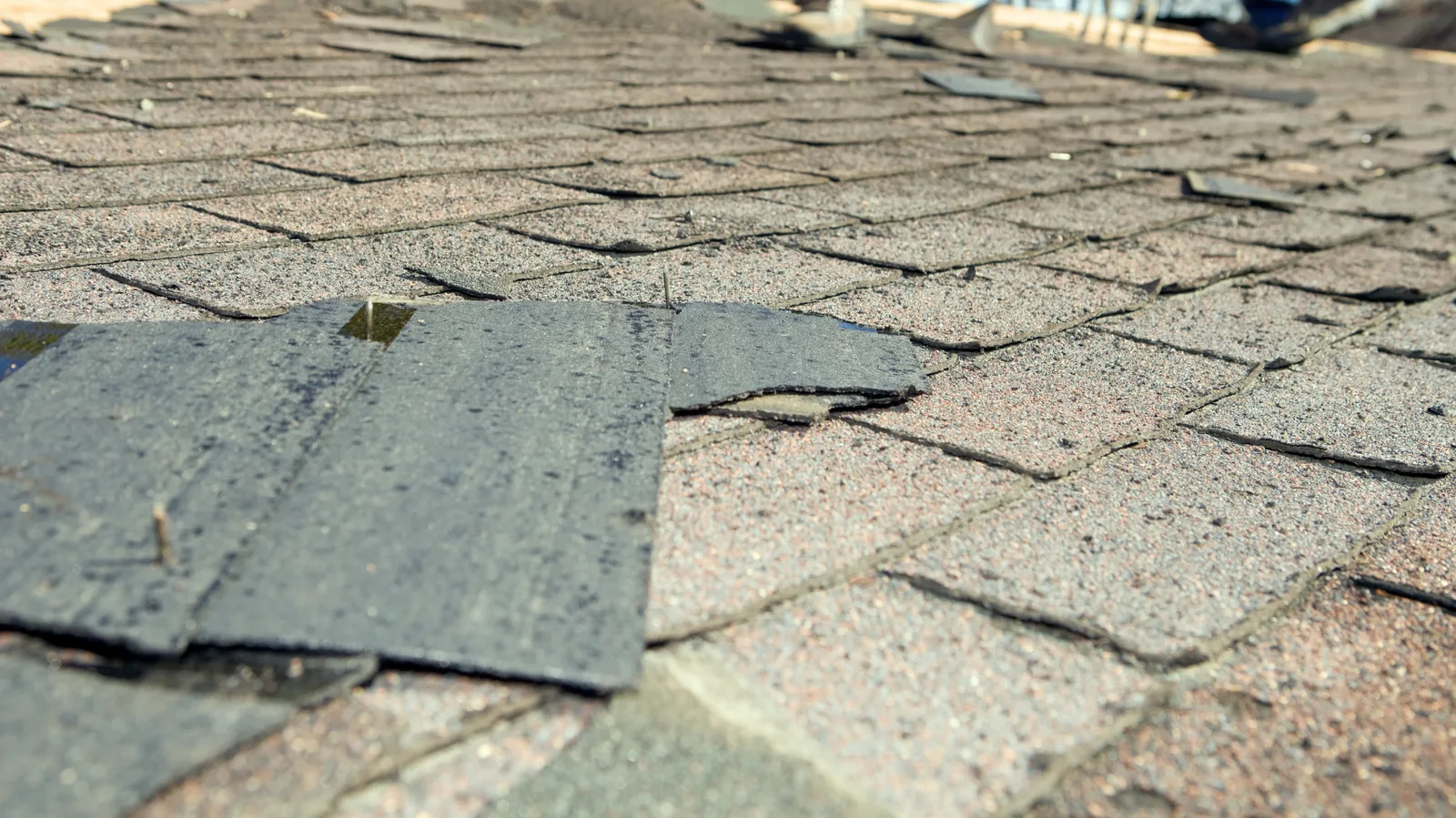
Wind gets under the leading edge of a shingle and breaks the adhesive seal, then works the tab up and down until it creases. A creased shingle is broken even if it lies back down. Torn or missing tabs leave the underlayment or bare decking open to the next rain. Repair means replacing the affected shingles and resealing the courses around them.
- Hail on the shingle surface
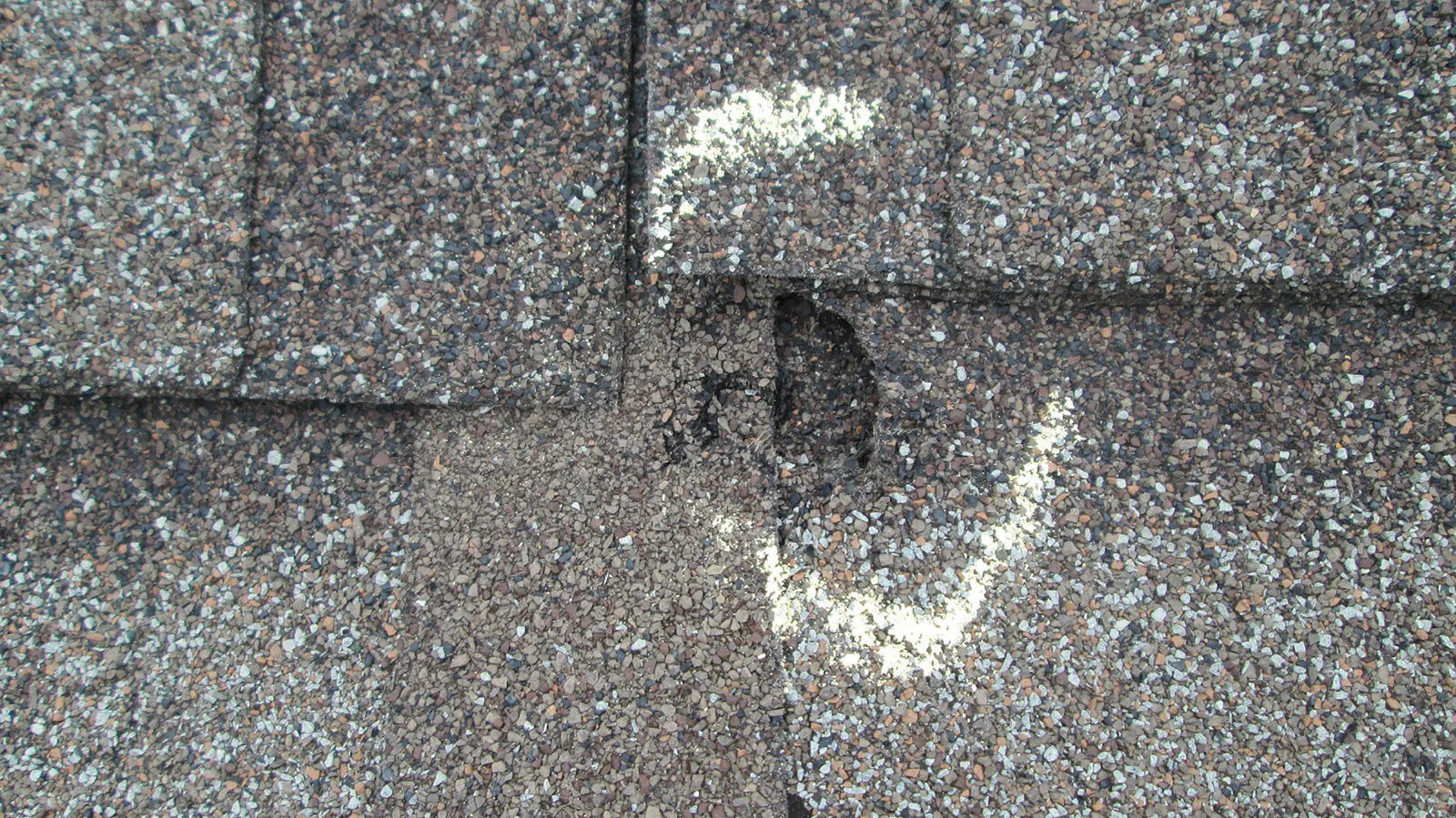
Hail bruises the mat under the granules and knocks granules loose in a rough circle. Fresh hits are soft to the touch and show dark where the granules left. A few scattered hits are cosmetic. Hits across a slope shorten the shingle's life because the exposed mat weathers fast. Whether that is a repair or a replacement depends on how much of the roof is affected.
- Metal edges, vents and flashing
Soft metal shows hail first: dents in vent caps, drip edge, gutters and roof flashings. Dented metal usually still sheds water, but a vent cap that has been crushed or a flashing that wind lifted can leak straight away.
- Debris and impact damage
A limb that comes down on a roof can crack shingles and punch through decking. That opening needs to be covered right away and then repaired down to the deck. A patch over the top does not fix a broken board.
- Water that got in
Once the covering is open, rain runs along the decking and rafters. Stains, wet insulation and damp sheathing under a damaged area are part of the same repair, and the roofer looks for them when the shingles come up.
Keep clear of immediate hazards
What to do right now, before anyone looks at the roof.
Stay off the roof after a storm. Keep away from fallen power lines, unstable trees and damaged structures. Inside, avoid water near electrical equipment and rooms with a sagging ceiling. Contact emergency services or the responsible utility for an immediate hazard.
If a small drip can be contained from a safe location, a container and moving belongings can limit further damage while help is arranged. Do not enter an unsafe space for a photo or try to secure a tarp yourself. Tell us if water is entering now; a roofing request does not promise emergency attendance.
How storm roof repair in Rogers takes shape
- 1
Tell us what changed
What you saw from the ground, whether water is coming in, and the storm date if you know it. Photos from the yard help; photos from the roof are not worth the climb.
- 2
A roofer walks the roof
The free inspection covers every slope, not just the one facing the weather, and looks at the metal, the vents and the gutters as well as the shingles. Wind damage clusters at edges and ridges; hail marks spread across a slope. The pattern is what tells the roofer what happened and how far it goes.
- 3
Temporary protection if the roof is open
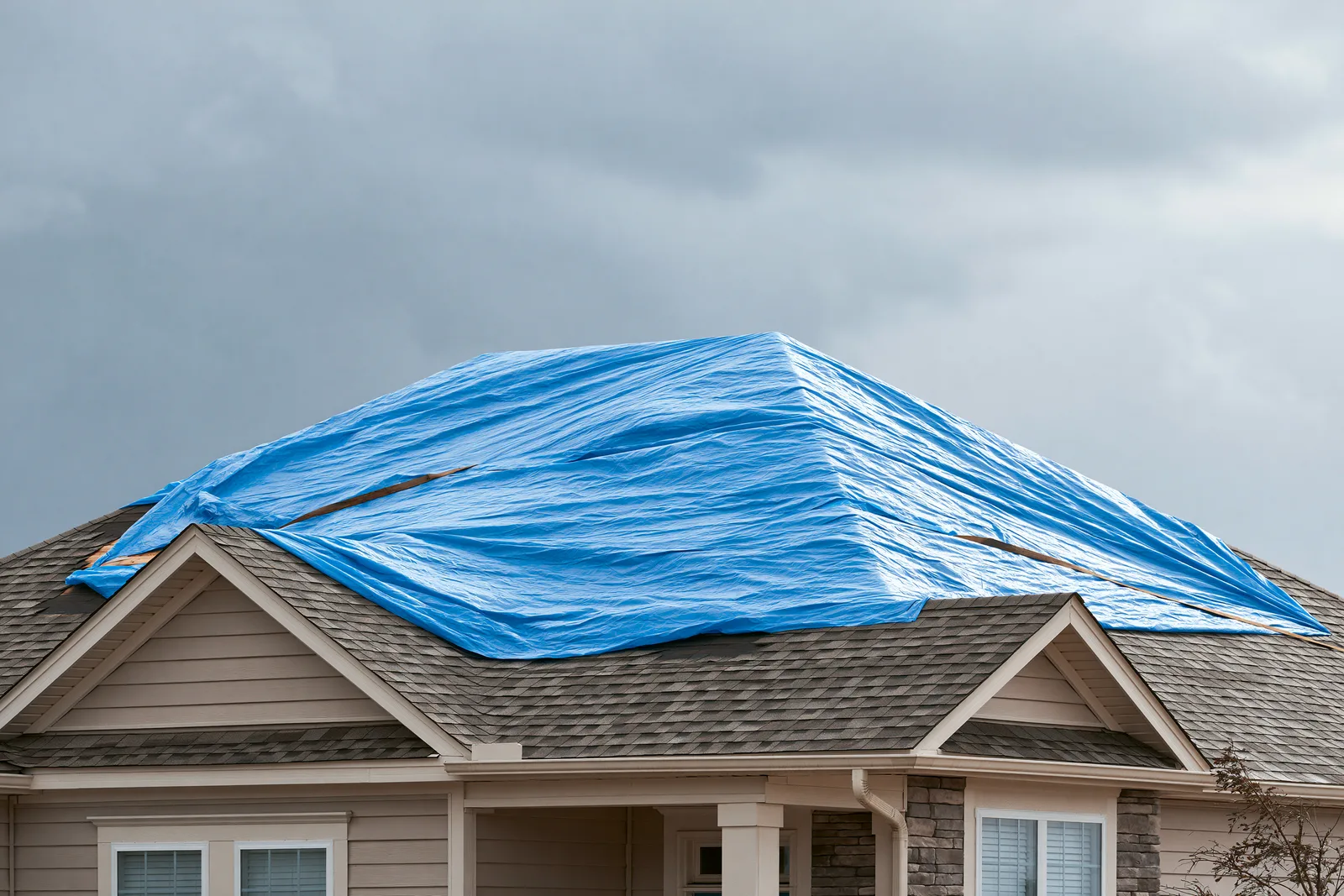
Where shingles or decking are missing, the roofer covers the opening properly so the next rain stays out while the permanent work is scoped. Temporary cover is a bridge, not the repair.
- 4
A scope that matches the damage
Localized damage with sound shingles around it gets a repair that restores every layer, not just the visible tear. Missing covering over exposed deck means the underlayment and any wet wood are part of the job. Damage spread across the roof, or shingles too brittle to repair into, means comparing a larger repair with replacement. The roofer explains which and why.
- 5
The insurance conversation
If you are filing a claim, the roofer's findings describe the damage and the work it needs. Coverage, deductibles and the claim decision belong to your policy and your insurer. A roofing visit describes the roof; it does not decide the claim.
A Rogers storm date is context for the roof
One recorded example, and what it can and cannot tell you.
A known date helps you remember when you first noticed a change and gives an insurance conversation something to anchor on. It does not prove hail struck your address, date every mark on the roof or decide coverage. The roof's condition today still needs its own look, and that is what the inspection is for.
If you know the date, mention it when you ask for the inspection, along with when you first noticed the change. The roofer reads the roof as it is now; the date helps you keep the story straight for your own records and any claim.
Storm damage FAQs
Should I call my insurer before the inspection?
You can contact your insurer about its reporting requirements and any policy deadlines. The roofing inspection helps describe the condition and proposed work. Coverage, deductibles and claim decisions belong to the policy and insurer; a roofing visit does not guarantee payment.
I noticed damage weeks later. Is an inspection still useful?
Yes. It can assess what is there now and help explain repair options. Mention when you first noticed it and any known storm date. The roof inspection page explains the visit’s scope.
Will temporary protection finish the repair?
Temporary protection is intended to limit exposure while permanent work is arranged. It is not a substitute for repairing the damaged layers and details. Discuss the condition and safe access with the roofer; do not climb up to improvise protection.
Does one damaged slope mean the whole roof has to be replaced?
Not automatically. The affected area, surrounding material and ability to complete a compatible repair matter. The roof repair page explains those boundaries.
Request a storm damage roof inspection in Rogers
Tell us what changed after the weather and whether water is entering. A free roof inspection helps explain the current damage and the next roofing step.