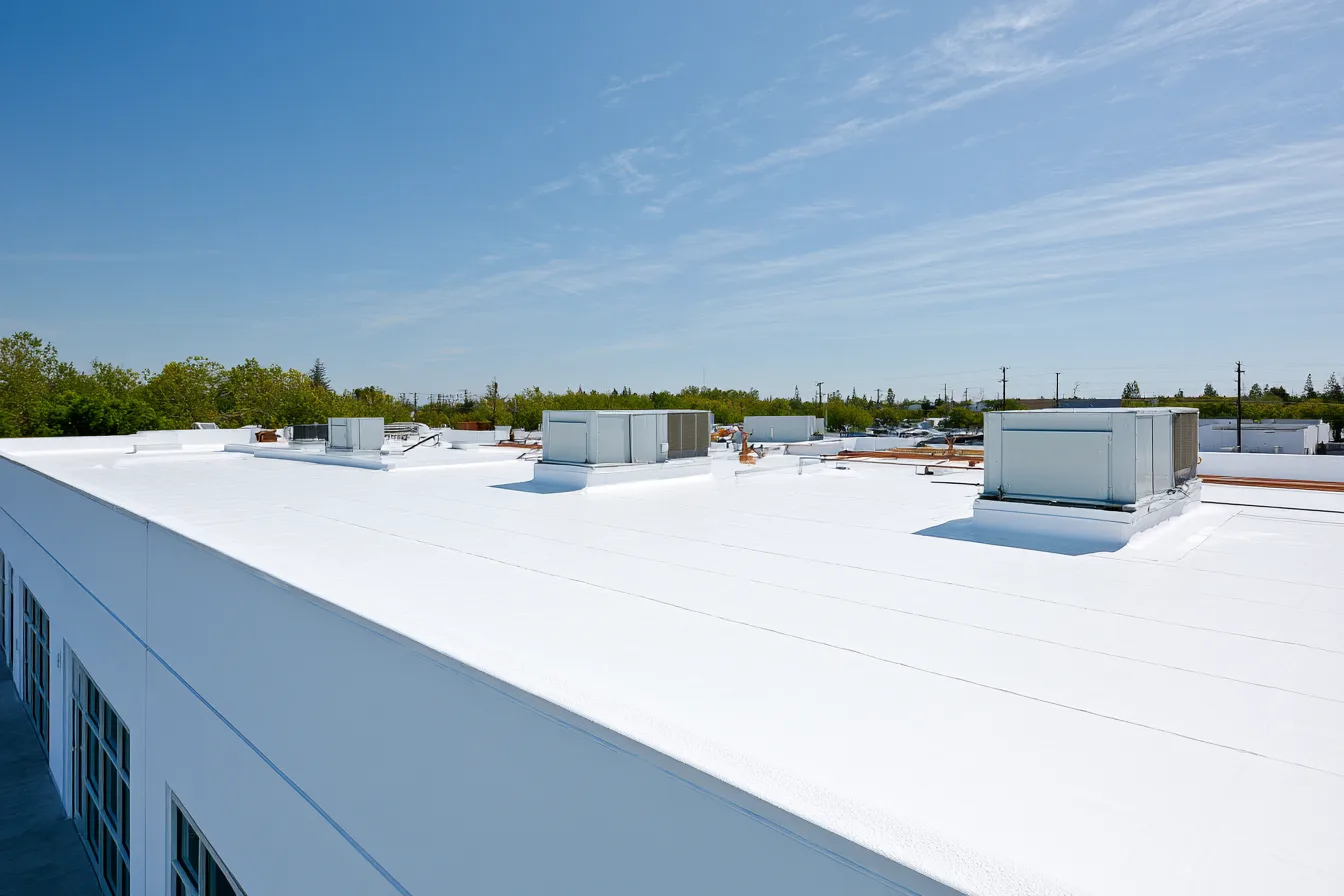
Commercial roofing in Rogers, Arkansas
For an owner or property manager, the roof is an operating asset. Get a free inspection of the actual membrane, seams and drainage, and a straight read on repair versus restoration versus replacement.
Free roof inspections in Rogers. Discuss the condition and your roofing project before deciding on work.
Where a Rogers commercial roof inspection concentrates
A low-slope inspection pays close attention to the places the roof surface is interrupted: sheet seams, vent pipes, conduit, rooftop-unit curbs and wall flashings. Drain connections and scuppers, the outlets through parapet walls, also need a close look. A defect at one detail can let water travel under an otherwise intact surface.
The inspection considers those details alongside the membrane field and the path water takes off the roof. A blocked outlet and a failed drain flashing are different problems. Finding the cause matters before a repair is selected or restoration is proposed.
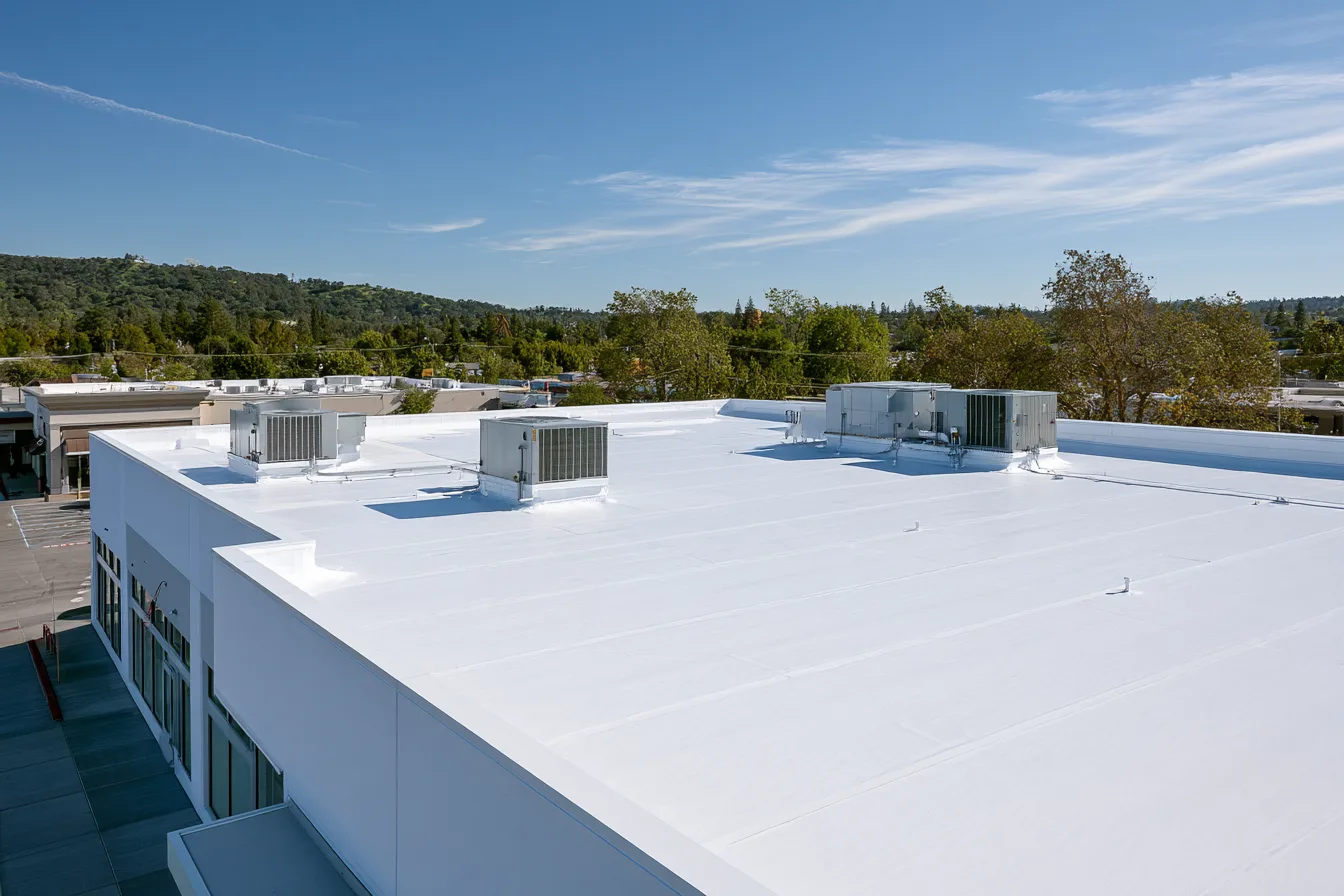
Repair, restoration or replacement for a Rogers building
The condition beneath and around the damaged area helps distinguish three different kinds of work.
- Repair
The right call when failures are local: a failed seam run, damaged flashing at a curb, a puncture. The membrane around the failure has to be sound enough to bond to. Repairs keep a fundamentally healthy roof going.
- Restoration or coating
A roof with a sound, compatible surface may be a restoration candidate. Check the condition beneath the surface, including moisture in the assembly. Wet or damaged materials and failed details need attention before a coating can protect the prepared roof.
- Replacement
Replacement becomes a serious option when deterioration or wet materials are widespread, repairs cannot connect to sound roof or the assembly needs broader correction. Compare its full scope with the repairs the existing roof would still require.
What a Rogers low-slope roof scope covers, part by part
Whether the job is a repair, a coating or a full replacement, the same parts of the roof have to be dealt with. Here is what each one involves.
- The membrane field
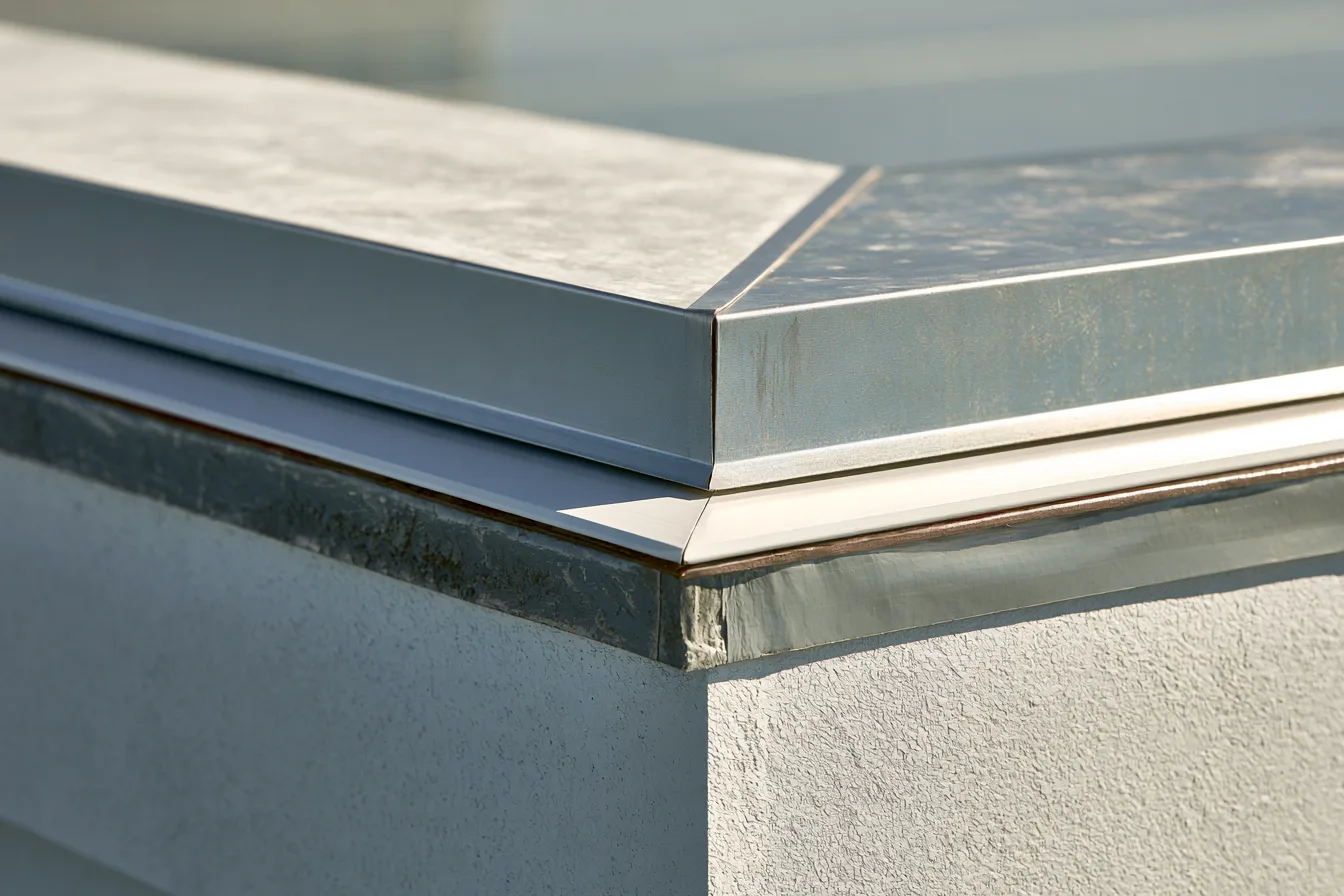
The open surface between details. On a single-ply roof that is welded or glued sheet; on a built-up or modified roof it is layered asphalt and cap sheet. The field is checked for punctures, blisters, open laps and areas that have gone brittle or lost surfacing. A repair patches into sound material; a replacement takes it off.
- Seams and laps
Where sheets join. Welded seams are probed for voids; glued seams and asphalt laps are checked for fishmouths and separation. A failed seam lets water run under a surface that looks fine from above, so seams get walked, not glanced at.
- Curbs, penetrations and walls
Rooftop units sit on curbs, and pipes, conduit and drains pass through the roof. Every one needs flashing turned up and terminated so water cannot get behind it. These small areas carry a large share of the work on almost any commercial roof, and they are where most of the leaks we trace begin.
- Drains, scuppers and edge metal
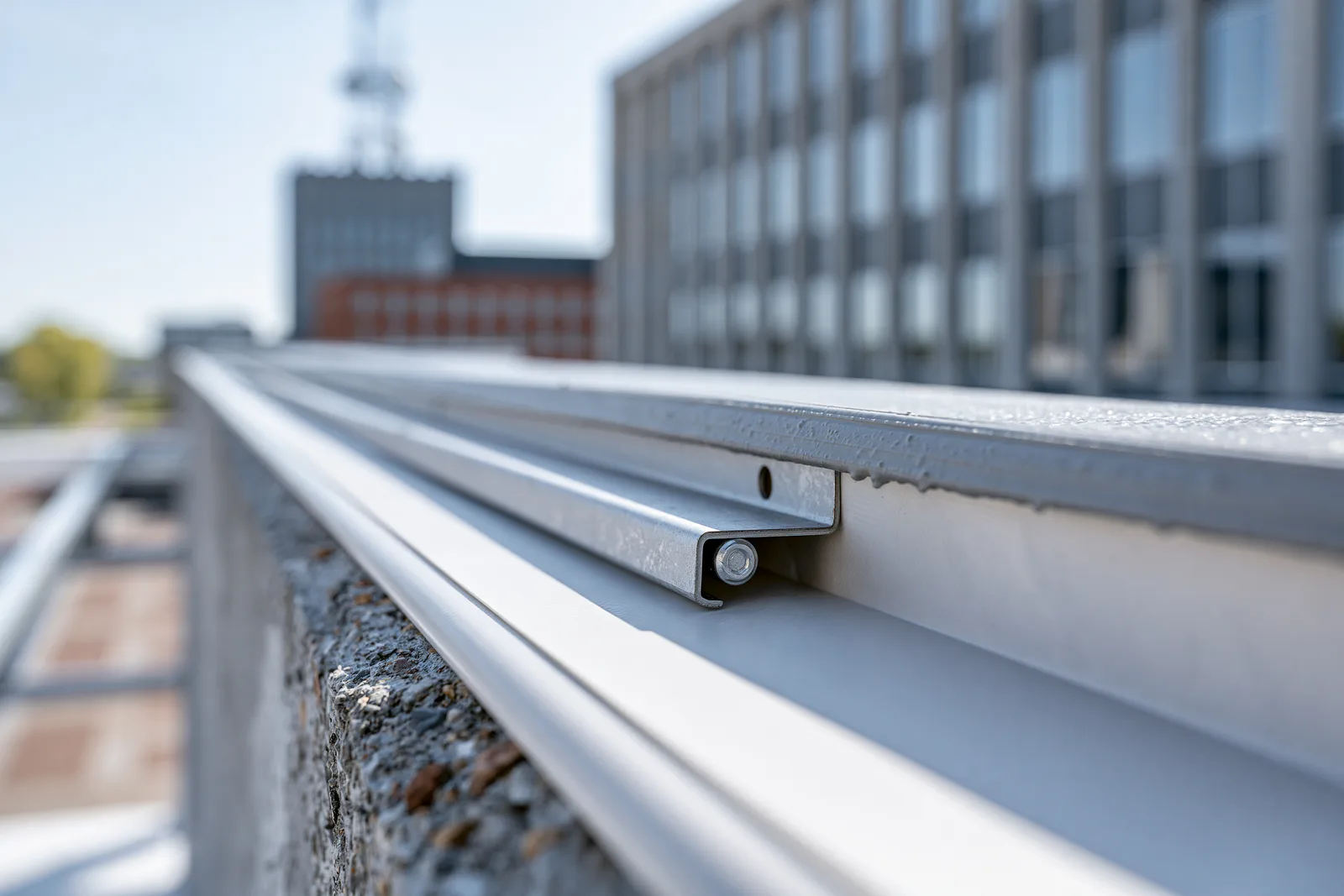
How water leaves the roof. Drain bowls and clamping rings, scuppers through the parapet, gutters at the edge and the coping or edge metal along the perimeter. A blocked drain, a loose clamping ring and a lifted edge metal are three different problems with three different fixes.
- Insulation and the deck
Under the membrane is insulation, and under that the structural deck. Wet insulation does not dry out under a new surface. Where moisture is found, the wet material comes out and the scope says how much. Insulation condition is the biggest single reason a coating is or is not the right answer.
- Walkways and equipment access
Technicians servicing rooftop units walk the same route every visit. Protective walkway pads along that route and around the units keep the new surface from being punctured by the next filter change.
Roof work on an occupied Rogers building
Commercial roof decisions carry operating questions that residential work doesn't: tenants under the work area, inventory that can't get wet, loading docks that need to stay clear, rooftop equipment that has to keep running. Those constraints belong in the plan from the start, not discovered mid-project.
Keep any roof history you already have together: installation details, past repairs, leak locations and warranty documents. That record helps compare new findings with earlier ones and plan budgets, although it cannot predict when every problem will develop.
Tell us what is under the roof and when the building is busiest. A repair over an occupied office is sequenced differently from one over an empty warehouse, and knowing that up front keeps the work out of your tenants' way.
Commercial roofing services in Rogers
TPO roofing
Welded seams, membrane repairs and the details in a TPO project.
TPO roof decisionsRoof coatings
Substrate, moisture and preparation checks before restoration.
Coating suitabilityFlat roof repair
Leak and drainage investigations across low-slope materials.
Flat roof repairCommercial roofing FAQs
The roof only leaks during hard rain. Is that urgent?
Arrange an inspection and protect affected interior areas without entering unsafe spaces. Wind-driven rain, water collecting near an outlet and a damaged flashing detail can each reveal a leak under particular conditions. The pattern helps direct the investigation; it does not identify the cause on its own.
Can our roof be coated instead of replaced?
A sound, dry roof with a compatible surface may be a restoration candidate. Wet materials, damaged details and adhesion problems must be addressed first. The roof coating page explains the checks that separate a suitable project from one needing wider work.
What should we have ready for an inspection visit?
Roof access, and whatever history you have: where leaks have shown inside, past repairs, roughly when the roof went on. None of it is required, but it sharpens the read. Set up a visit through the contact page.
Get a straight answer on your Rogers commercial roof
A free inspection of the actual membrane, seams and drainage, and a plain explanation of what the roof needs now versus what can be planned for.