Roofing in Downtown Rogers
Downtown buildings bring parapets, shared walls and a historic-district review question into roof planning. Start with a free inspection of the roof, then confirm the proposed work with the city before scheduling.
Free roof inspections across Rogers. A roofer walks the roof and explains what it needs before anyone talks price.
What sits on top of a downtown Rogers building
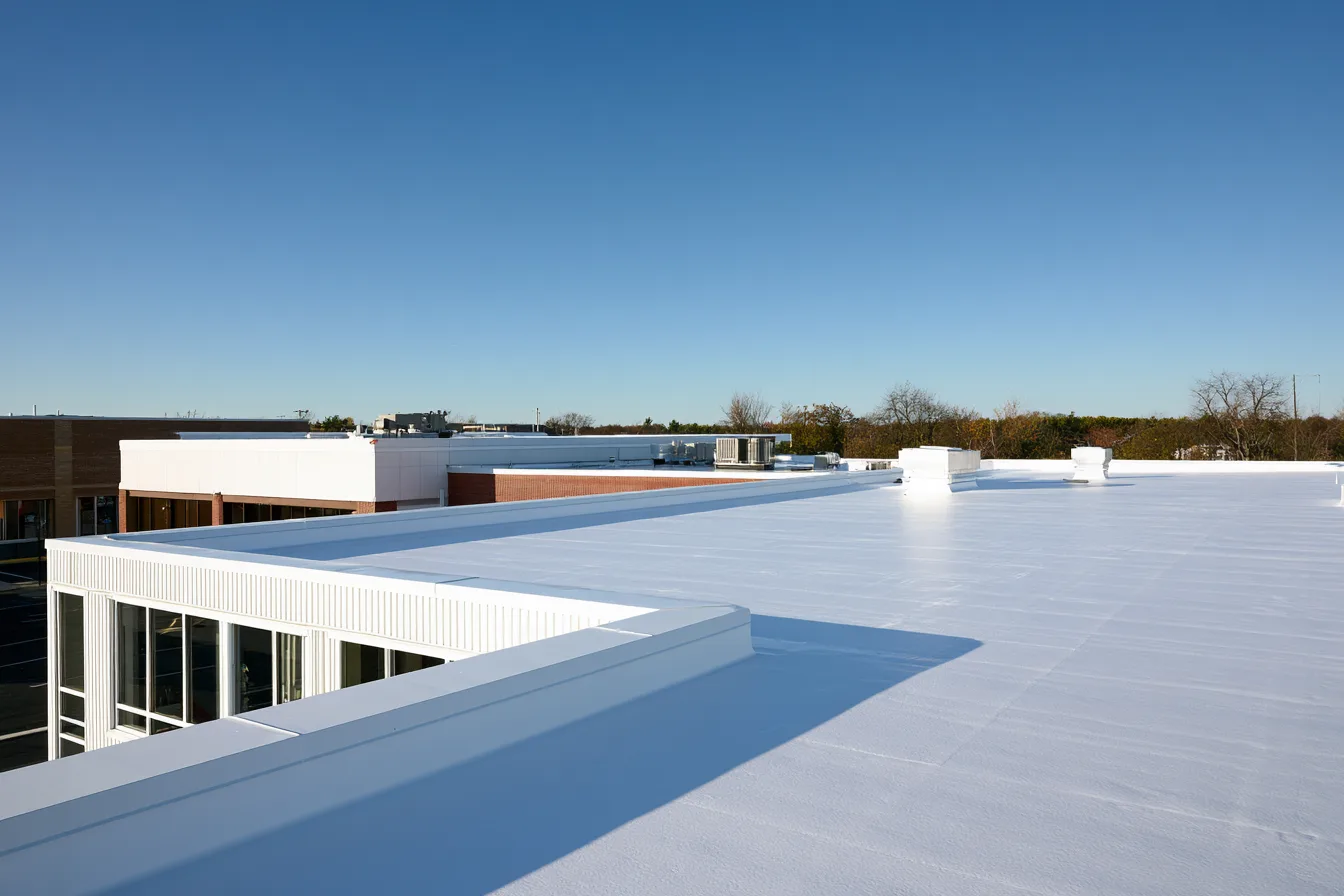
Downtown Rogers grew beside the railroad after its arrival in 1881. The commercial district retains buildings and streetscapes from its growth through the 1940s, including brick fronts and cornices. On a building with a low-slope roof behind that frontage, much of the roofing work is hidden from the sidewalk.
The roof still needs a continuous route for water: across the covering, through drains or scuppers and clear of walls. Coping joints, parapet flashing and connections to an adjoining roof deserve attention alongside the surface itself. Water can travel along decking before it appears over a storefront, so the inspection traces the opening and assesses the surrounding assembly. The flat roof repair page explains how that condition establishes a repair boundary.
Where a downtown roof lets water in
These are the parts a roofer checks on an older flat roof, and what each one does when it fails.
- Parapet and coping
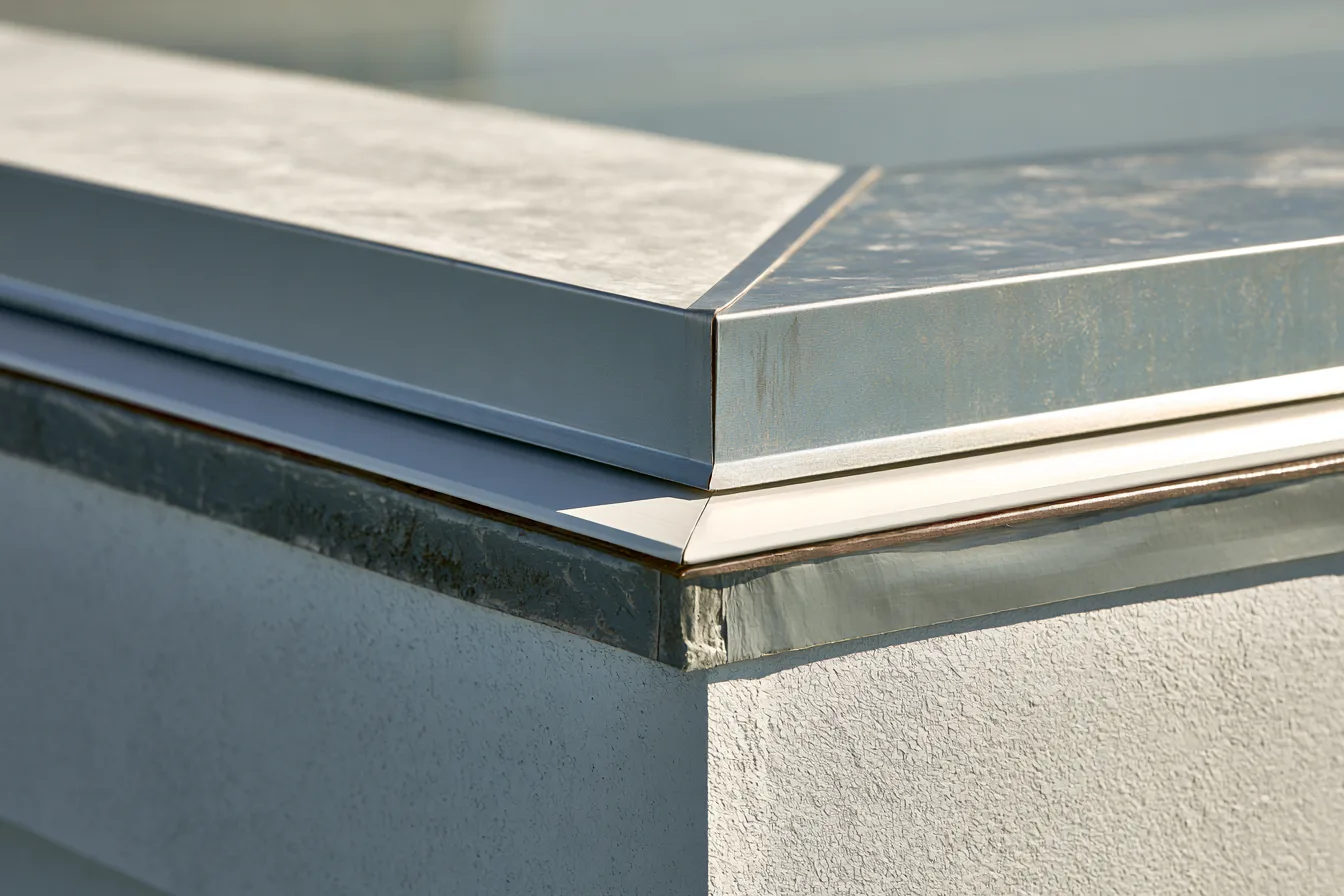
The brick wall rising above the roof takes weather from both sides. When the coping on top opens at a joint, or the counterflashing pulls out of the mortar, water runs down inside the wall and shows up far below where it got in.
- Drains and scuppers
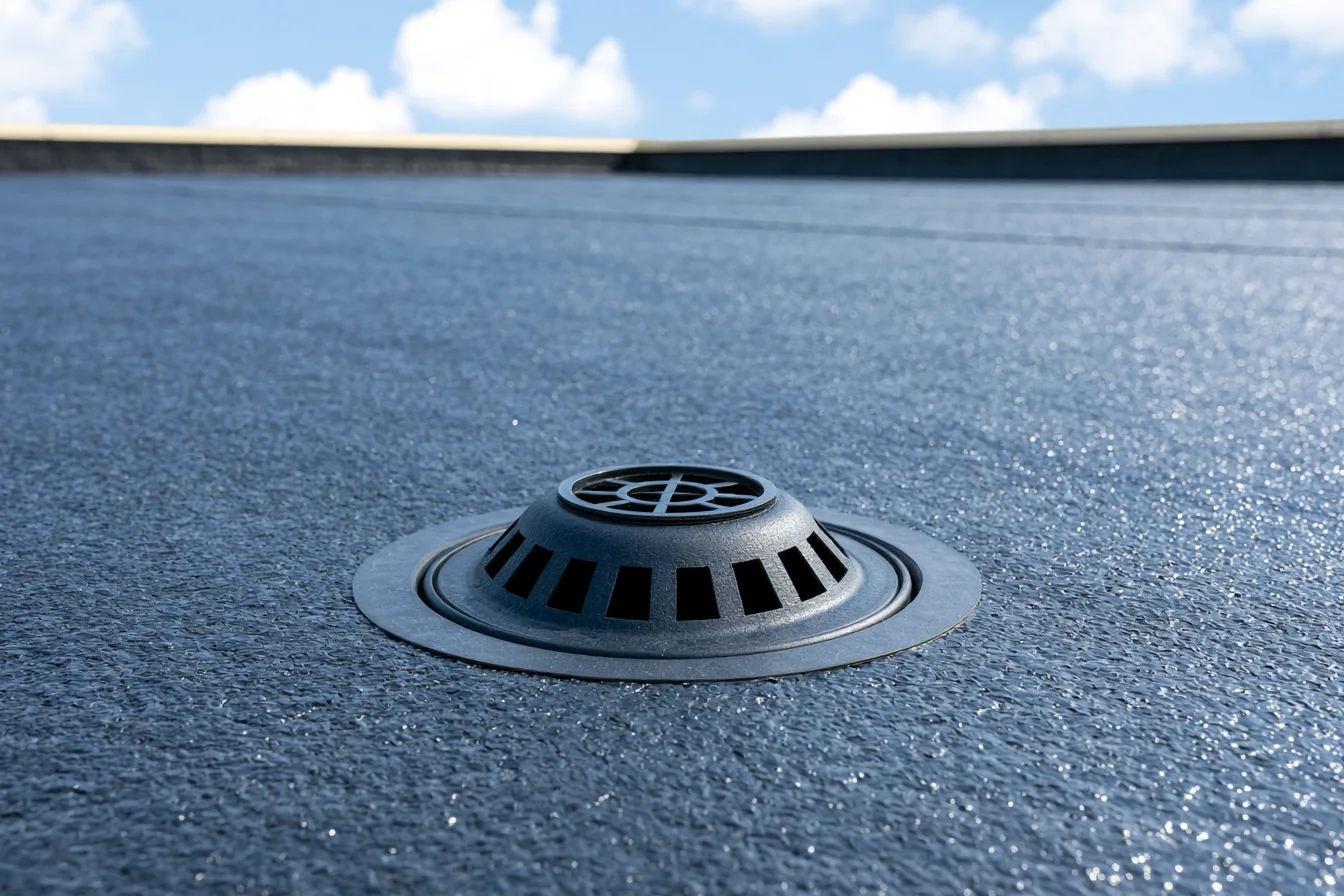
A flat roof lives or dies by its drains. A clogged strainer or a scupper packed with leaves turns the roof into a shallow pond, and standing water works at every seam it covers.
- Party walls and the roof next door
Downtown buildings share walls. Where your roof meets the neighbor's, the flashing has to be tied into both sides. A change on one side, a new coating, a raised roof, a fresh cap sheet, can leave the other side sitting low.
- Seams and the field
Blisters, open laps and a cracked surface need assessment alongside past repairs and the layers below. Those visible signs help establish present condition; they do not establish a dependable remaining lifespan or reveal concealed moisture by themselves.
- Rooftop equipment
Every unit, vent and sign mount is a hole in the roof with a flashing around it. Equipment set back behind the front parapet, below the street's sight line, is also what the district guidelines ask for.
- The cornice and the back wall
The district guidelines call for preserving cornices or reconstructing missing features from evidence. The rear elevation also needs attention: inspect its roof-to-wall flashing, gutters and discharge points even when they are out of public view.
Which downtown roof jobs go to the Historic District Commission
Buildings in the Rogers Commercial Historic District get exterior changes reviewed through a certificate of appropriateness. The city's design guidelines sort the work by what it changes, and roofing lands on both sides of that line.
Re-roofing in the same type and color is listed under ordinary maintenance: exterior repairs with no change in design, color, material or appearance.
Switching to a covering the street can see, a visible metal roof or a different color on a sloped section, is an exterior change the commission reviews.
Repairing brick, resetting coping and repointing joints keep the line where it is.
Raising, lowering or cutting the parapet line is called inappropriate in the guidelines, and altering a cornice needs the commission's review.
Replacing a unit in place, set back behind the parapet and out of the sight line.
New equipment, skylights or vents that would show from the street.
There is no maintenance version of these.
The guidelines want terraces set back from the front and solar arrays on a roof line not visible from the street, and both go through review.
How a downtown Rogers roof job gets arranged around the review
For proposed work, agree a written scope and confirm the applicable city steps before scheduling. These planning steps help coordinate the roof work with the current review calendar.
- 1
The roof gets walked, free
A roofer inspects the covering, parapets, drains and equipment flashings and tells you whether this is a detail repair, a re-cover of the same type, or a bigger change.
- 2
The scope names what changes and what doesn't
A written scope says exactly what is being replaced in kind and what, if anything, would alter the roof line or what shows from the street. That description is what the city asks for.
- 3
The review question gets answered before anything is torn off
Confirm with Planning how the proposed scope is classified and whether an application or certificate is required, including like-for-like maintenance. Confirm building-permit requirements separately. If a hearing is needed, use the current submission deadlines and meeting schedule before committing to a start date.
- 4
Permits are separate
A certificate of appropriateness does not replace a building permit. The Rogers permit guide covers who confirms what for roof work.
- 5
The work happens around your tenants
Downtown roofs sit over shops, restaurants and apartments. Hours, deliveries and the alley behind the building get worked out before the first roll goes up.
The older homes around downtown
The city's plan describes the neighborhoods around downtown as a grid of streets and alleys with a mix of architectural styles, periods and scales. Check the property's location against the commercial historic-district boundary rather than assuming that a nearby address is included or exempt. A property outside that boundary may still have permit or other applicable requirements.
An older house may have board decking, later repairs or replacement sheathing beneath its current roof. Construction era alone does not establish which is there. Accessible observations can guide the initial scope, but removing the covering may reveal gaps or damaged support that were concealed. The roof replacement scope should explain how concealed decking work is documented, authorized and priced. A roof repair likewise needs compatible covering and sound support around the opening.
Downtown Rogers roofing FAQs
Does a like-for-like re-roof downtown need the commission's approval?
The city's guidelines list roofing of the same type and color under ordinary maintenance, the category for exterior repairs with no change in design, color, material or appearance. Confirm with the Planning Division for your building, and keep the roofer's scope sheet handy; it is the written description of work the city asks for.
Can a coating extend a downtown flat roof instead of replacing it?
Sometimes, and only over a dry, sound roof. A coating seals a tired but intact surface; it does nothing for wet insulation or a failed deck, and coating over either locks the problem in. The inspection checks for moisture first. The roof coatings page explains what a coating can and cannot do.
Who handles the leak in a building with apartments upstairs and a shop below?
Whoever owns the roof arranges the fix; the inspection is the same either way. Tell us who occupies the building and when they are open so the work is planned around them. For a shared wall, the roofer looks at the neighbor's side of the flashing too, because that joint belongs to both roofs.
Get your downtown Rogers roof looked at
Tell us the address and what you have noticed: a storefront stain, standing water or a roof that has not been examined recently. A free inspection helps establish the roofing work. The resulting scope supports a separate confirmation with Planning and the permit office about required approvals.