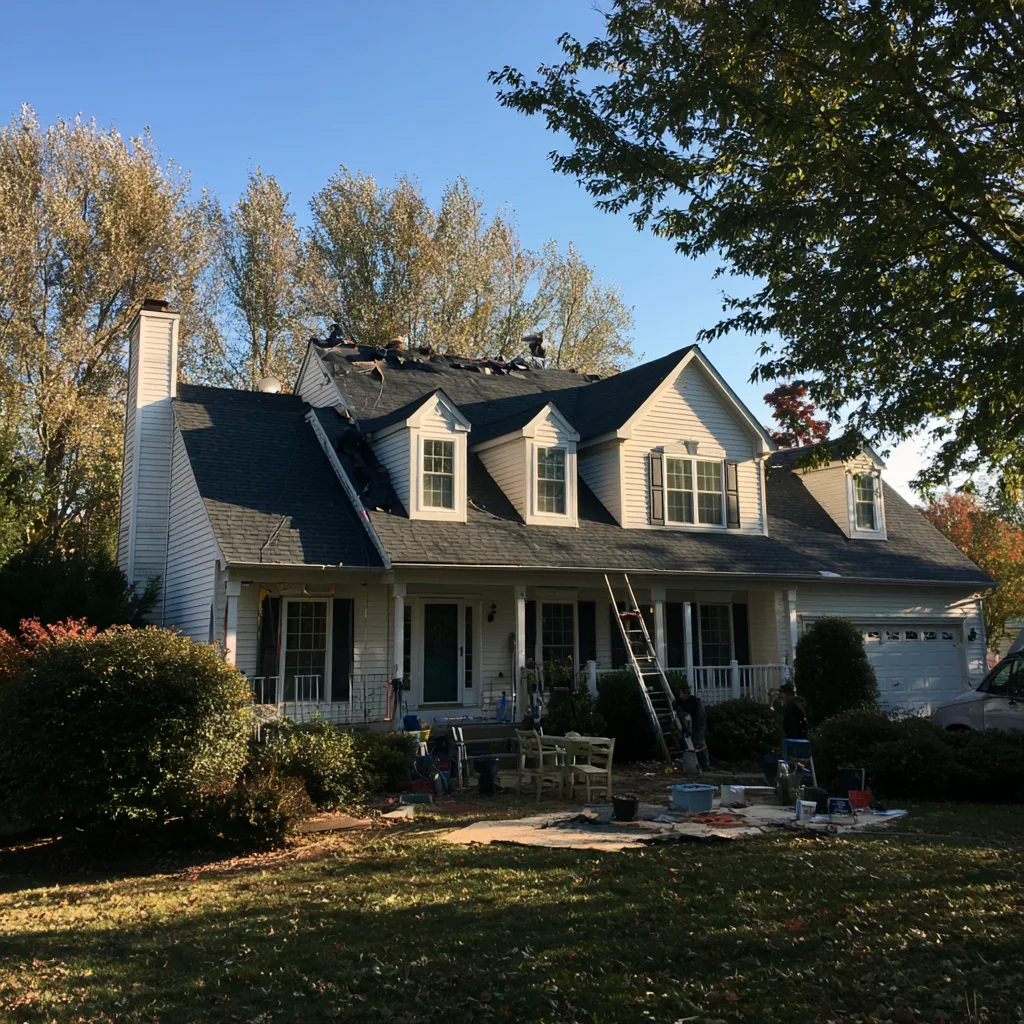
Roof repair in Rogers, Arkansas
A ceiling stain, split pipe boot or missing shingle calls for a close look at where water enters and what the repair can tie into. A free inspection helps define the work your Rogers roof needs.
Free roof inspections across Rogers. A roofer walks the roof and explains what it needs before anyone talks price.
What roof damage in Rogers actually looks like up close
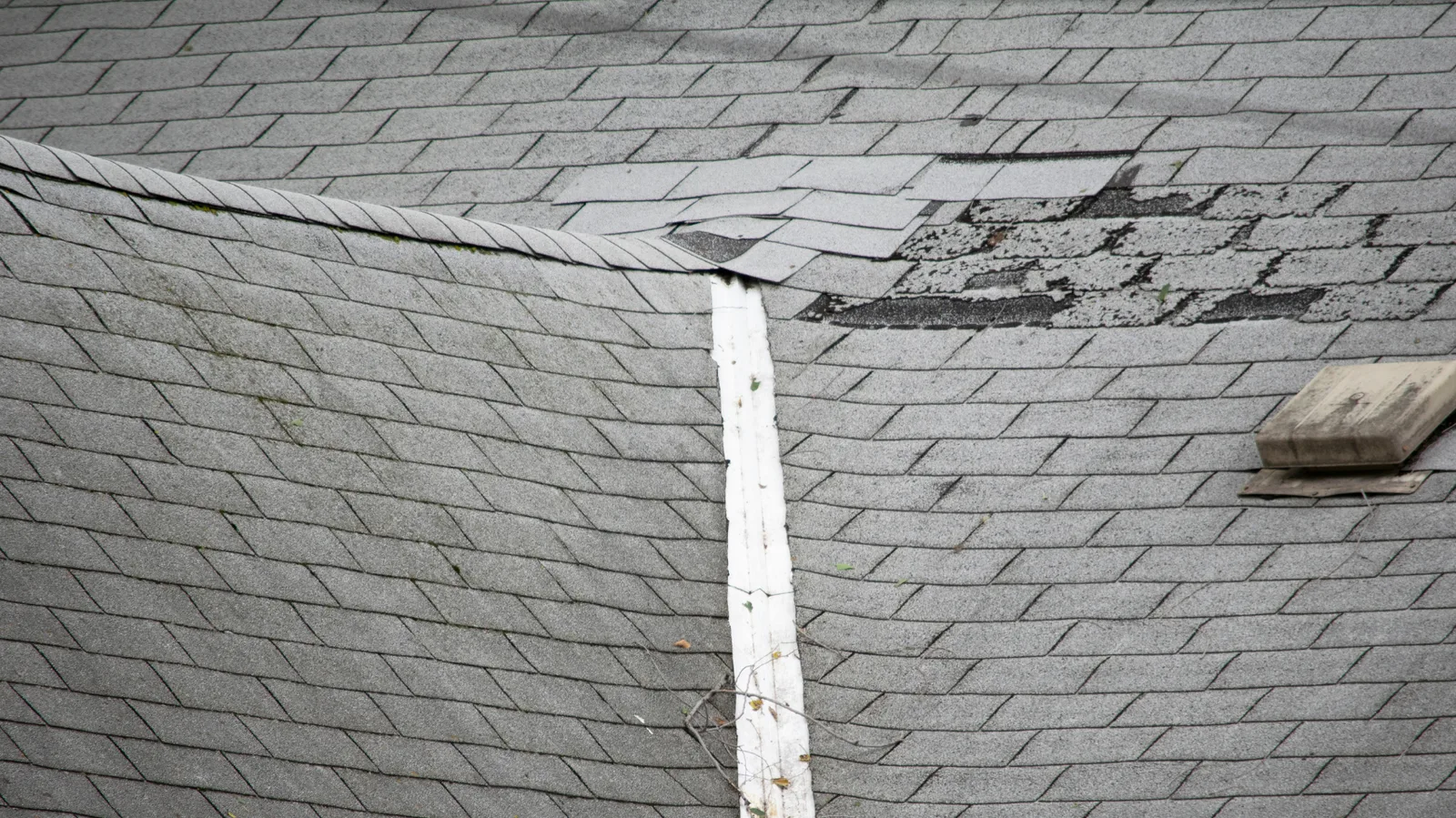
A failed pipe boot, a loose run of flashing or a damaged shingle each leaves a different opening for water. The rubber boot around a vent pipe can split with age. Metal flashing at a chimney or wall can separate from the joint it protects. Wind can lift shingles and break their seal, while exposed shingle mat loses the protection its granules supplied.
Water can enter at a boot or flashing gap, follow the underside of the decking or a rafter, and appear inside away from the opening. Repair planning follows that route back to its source. Covering the spot directly above a ceiling stain can leave the actual entry untouched.
What a Rogers roof repair covers, and when the scope grows
A repair is the right call when the damage is contained and the roofing around it is still sound. Here is what the work actually involves, piece by piece.
- Shingles
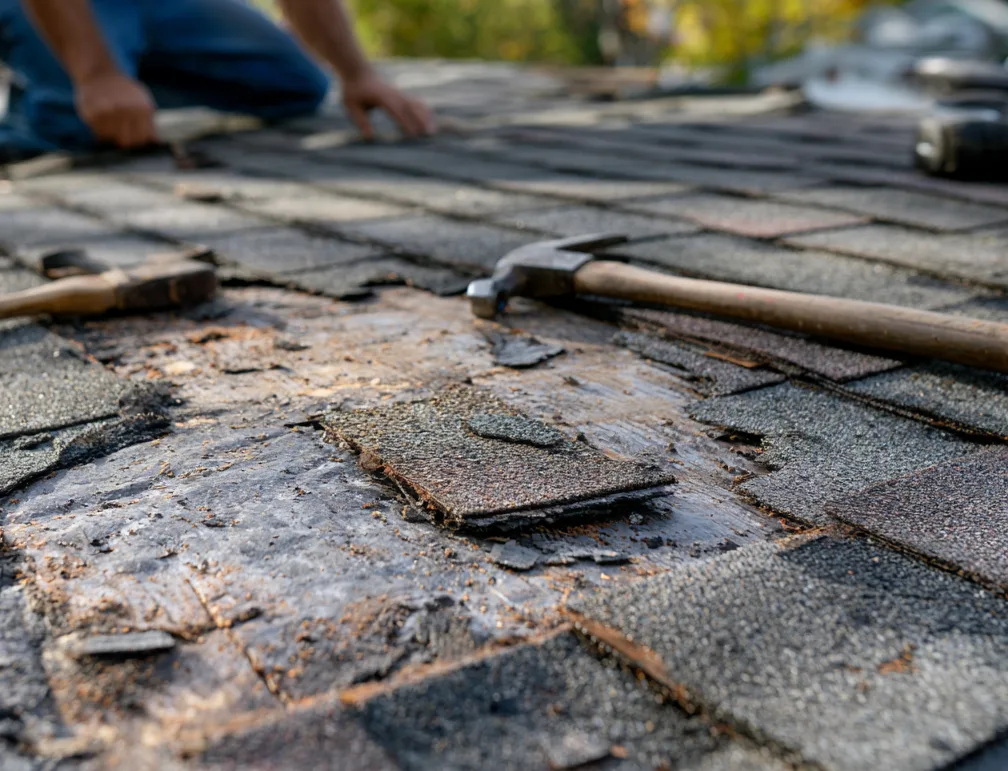
Wind-lifted, creased or missing shingles get replaced one at a time. The roofer breaks the seal on the course above, pulls the nails, slides the damaged shingle out and nails a new one in its place, then reseals the tabs. A small area is routine. When the shingles around it crack as they are lifted, they are too brittle to work with, and the repair area has to grow until it reaches shingles that can still be lifted and resealed.
- Pipe boots and vents
The rubber collar around a plumbing vent splits as it ages, leaving an opening where water can follow the pipe into the attic. The fix is a new boot, or a metal collar fitted over the old one, worked under the shingles above and over the shingles below so water runs past it. Box vents and turbine vents get the same treatment at their flanges.
- Flashing at walls and chimneys
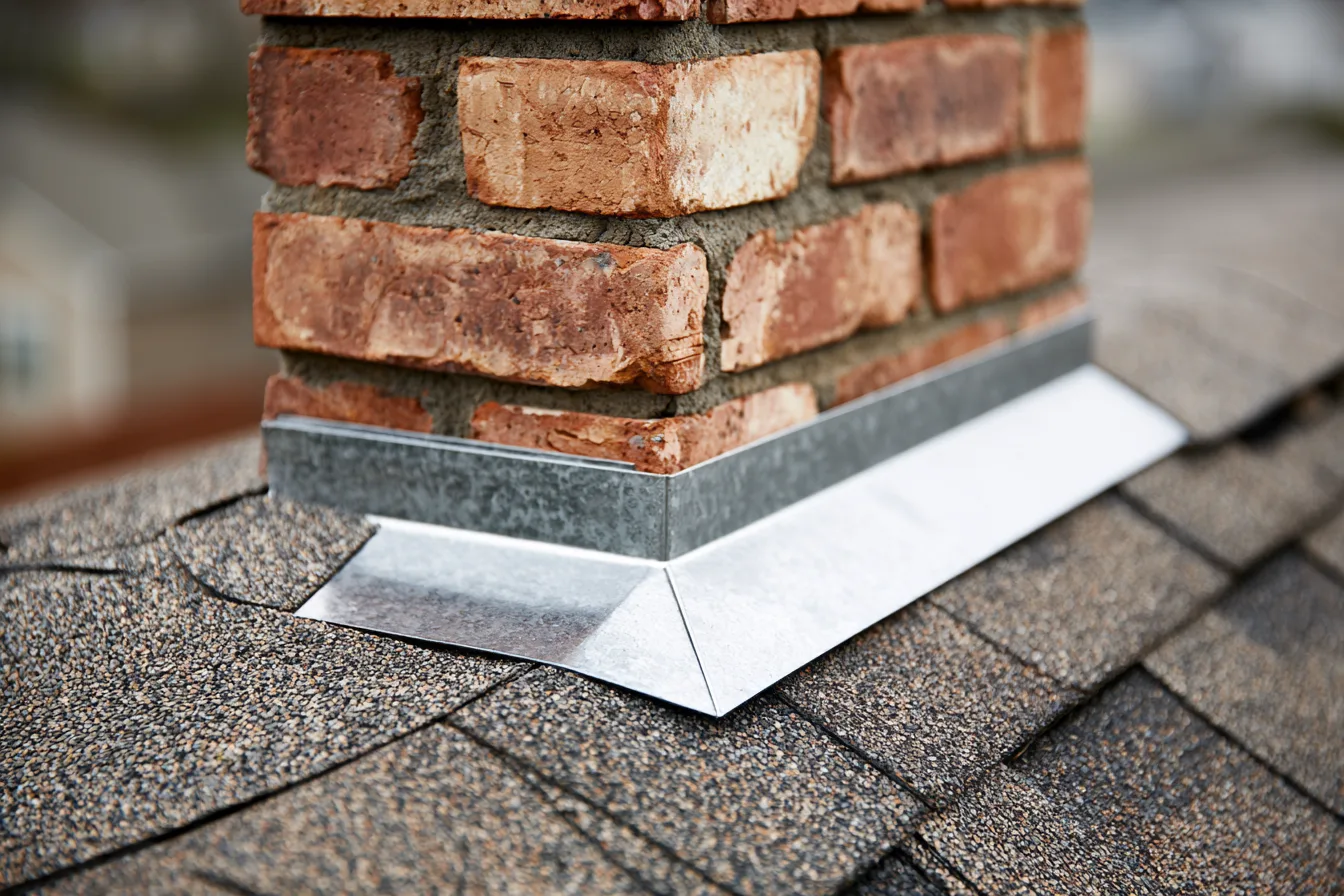
Step flashing is woven in with each shingle course where the roof meets a wall. Counter-flashing is let into the mortar joints of a chimney and folded down over the step flashing. When either pulls away or rusts through, the repair means lifting the shingles along that run, refitting or replacing the metal and sealing the joint into the masonry. A wide chimney without a cricket behind it, or one whose flashing was buried in sealant instead of fixed, changes how much of the run has to come apart.
- Valleys
A valley carries the runoff of two slopes in one channel, so a damaged lining or an open joint can admit a substantial flow of water. Repairing one means opening the shingles along both sides, replacing the valley lining or metal and re-lacing the shingles over it. It is more work than a field repair because both slopes are involved.
- The decking underneath
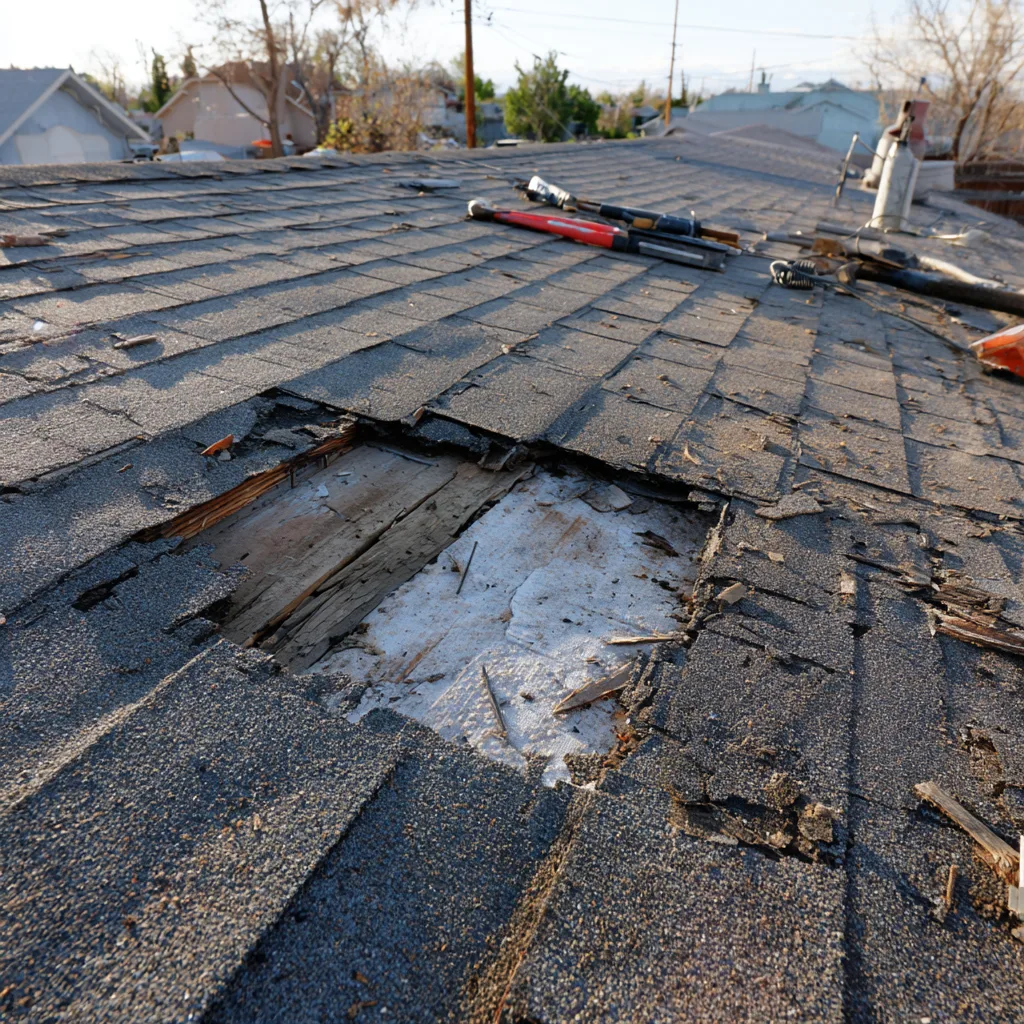
Once shingles come off, the roofer can see the wood. A leak that has run for a while often leaves a soft or stained patch of decking. That patch gets cut out and replaced with new sheathing before anything goes back on, because new shingles nailed into rotten wood will not hold. This is the one part of a repair that cannot be measured from above.
How roof repair goes with Rogers Roof Pros
Find the entry and assess the surrounding roof
Tell us where the water shows inside and when you noticed it. You do not need to locate the opening or go up a ladder. A roofer traces the likely water path and examines the covering, boots, flashing and nearby roof details.
The surrounding material matters as much as the opening. A new boot or flashing needs sound roofing to join into. Concealed damage or an unclear water path may require further investigation before the complete scope is known.
Agree on the repair and possible changes
The findings should connect the failed detail to the proposed work: which shingles or flashing come apart, what replaces them and how the new laps will shed water. You can ask why a wider area needs attention.
The proposal should also explain how damaged decking discovered after opening is priced and approved. Material matching, access and any temporary protection belong in that discussion, so the agreed work is clear before it begins.
Restore the detail and check the finished work
The failed material is removed far enough to reach sound roofing. Any damaged substrate within the repair is addressed before compatible underlayment, flashing and covering are fitted back in the proper order. A surface bead of sealant does not replace a failed water-shedding detail.
Completion includes examining the repaired laps, fasteners and tie-ins. Cleanup, disposal and any applicable workmanship terms should be part of the agreed scope, along with whom to contact if the same area leaks again.
Where a Rogers repair ends and wider work begins
The honest line between a repair and something bigger is drawn by the roofing around the damage, not by the damage itself. A single split boot on a roof with flexible shingles is a repair, full stop. The same boot on a roof where every shingle crumbles when it is lifted is a different conversation, because the roofer cannot tie new work into material that falls apart.
Three things push a repair toward wider work. Shingles that have gone brittle across the slope, not just near the leak. Decking that is soft in more than the one patch under the leak. And leaks in several places that need investigation beyond the original repair. Repeated leaks may involve separate details, broader covering deterioration or concealed damage. When that is what the roof walk finds, the useful thing is to price the repair and a replacement side by side, so you can decide whether the money goes into keeping this roof going or into the next one.
None of that is an automatic verdict. An older roof can still be repairable when the surrounding materials and the proposed tie-in remain sound. The point is that you hear what the roofer saw and why, and the decision stays yours.
What drives roof repair cost in Rogers
Repair pricing follows the work. There is no price list here because the same leak can be a small job on one roof and a large one on the next, but these are the things that move it, and they are the things a proposal should spell out.
One failed boot or one flashing joint, found and confirmed on the walk.
Several entry points, or a leak that turns out to be two separate problems showing up in one ceiling.
A few shingles above the detail, resealed after the fix.
A long wall flashing run, a full valley, or a chimney whose counter-flashing has to be re-let into the mortar.
Dry, solid decking that takes a nail.
Soft or rotten sheathing that has to be cut out and replaced before anything goes back on. This is the item that cannot be known until the shingles are lifted, and the proposal should say how it is handled.
A common shingle still in production, or a repair spot that is not visible from the ground.
A discontinued color or profile that has to be sourced, or a visible slope where the match matters to you.
A walkable slope with a clear place to set the ladder.
A steep or high roof, or tight access around trees, fences and power lines that slows the job.
Roof repair FAQs
Can you find a leak if I don't know where it's coming from?
Yes. You can report the room and what you have noticed without knowing the roof opening. Water can run along decking or framing before it reaches the ceiling. The investigation follows that path and checks the roof details above it; some concealed conditions need further investigation.
Is it worth repairing an older roof, or should I just replace it?
Age alone does not settle it. A local repair can be useful when the surrounding shingles remain sound enough for the new work. Widespread brittleness, deterioration beneath the covering or repeated unresolved repairs are reasons to compare a roof replacement with the repair scope.
Do I need to do anything before the roofer arrives?
Stay off the roof. If a small drip can be contained safely, place a container beneath it and move belongings out of the way. Keep clear of sagging ceilings and water near electrical equipment; do not enter an unsafe area to take photos. An inspection request is not an emergency response service.
What if the damage came from a storm?
Mention the storm date if you know it. An inspection describes the damage and condition now, but roof appearance alone may not establish when it happened. The storm damage page explains the next steps without assuming insurance coverage.
Get your Rogers roof leak looked at, free
Tell us where the water is showing. Start with a free inspection and discuss the likely entry point, the roofing around it and the repair the findings support.