A roof leak after rooftop equipment work
A leak that appears after an equipment visit deserves attention, but the timing alone does not explain the cause. Start with the recent work, the affected space and the roof details around them.
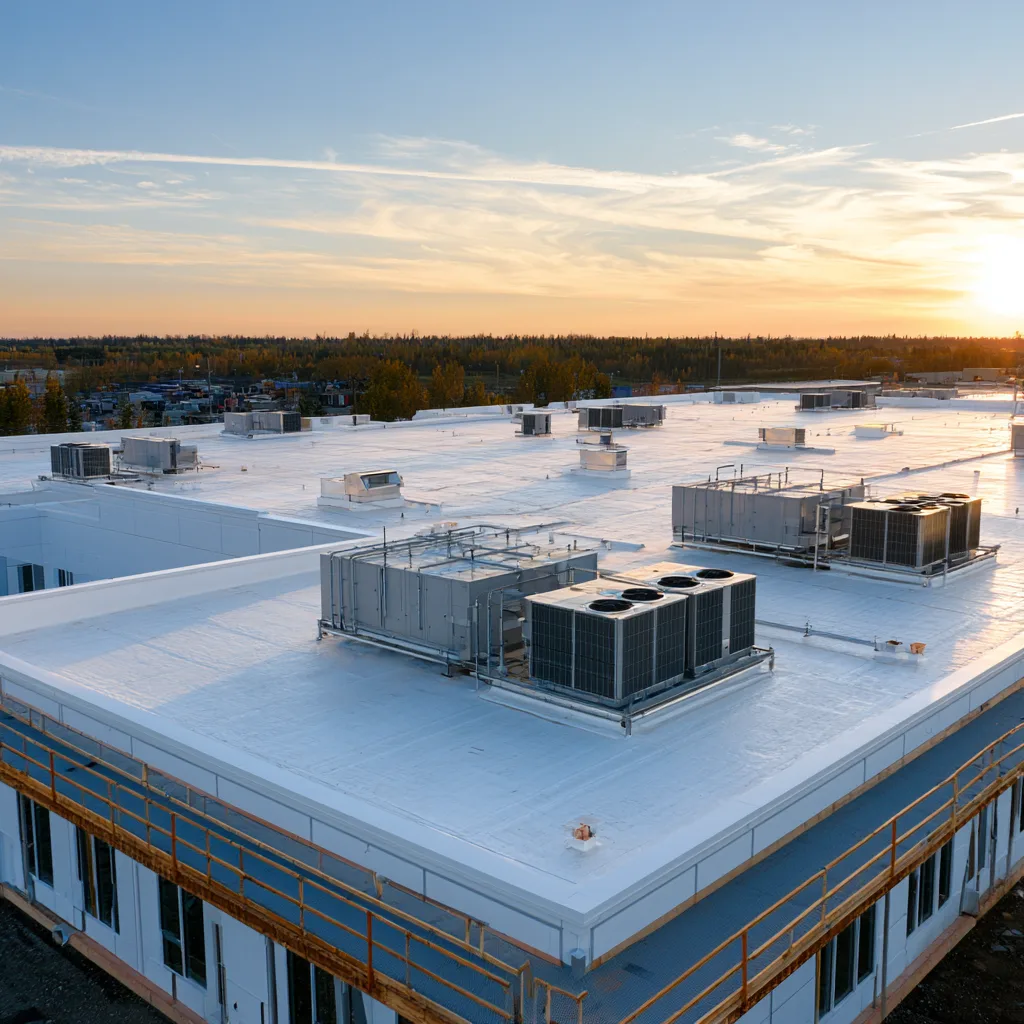
The timing is useful, but it is not a diagnosis
A building manager can supply a useful starting point without making a diagnosis: which equipment was serviced, when it happened and where water later appeared. A technician’s route, a new penetration or a disturbed flashing detail may be relevant. So may an unrelated seam or drainage issue that became noticeable in the next rain.
Keep the conversation about observed conditions. A new stain does not establish who caused an opening, and a leak below equipment does not prove the water entered at that unit. Water can travel within the assembly before it drops into the space below.
Look at the equipment detail and the route across the roof
The inspection can consider the curb around the unit, pipe and conduit penetrations, seams nearby and the path used to bring tools across the roof. A dropped object may damage a membrane; an added cable or pipe may need a new waterproofing detail. Drainage paths also matter if equipment or debris changes where water collects.
The repair method must match the existing roof material. A product chosen only because it sticks to the surface does not establish a durable compatible repair. Surrounding condition and any moisture beneath the covering affect the scope.
Our flat roof repair page develops the investigation across different low-slope roof materials.
Make the next repair easier to understand
Keep the service date, leak location and any earlier repair information together with the roof records. Those details help compare findings now and after later work. A roof file is useful history, not a guarantee that the next leak can be predicted.
If equipment is being replaced, coordinate access, protective walkways and the new penetration or curb details before the installation starts. The roofing and mechanical scopes should identify who completes the weatherproof connection and how future service access will be protected.
For an identified membrane system, the TPO roofing page explains welded details and compatibility. A repair should address the specific defect rather than add another unexplained layer over it.
Arrange a look at your Rogers commercial roof
Rogers Roof Pros offers free inspections for building owners and managers. Share the building location and what changed so the roof condition can be examined and the next step discussed.